
Korean Traditional Desserts Go Mainstream: Yakgwa and More Win Over the MZ Generation
In This Article
Traditional Desserts Move Into Everyday Channels
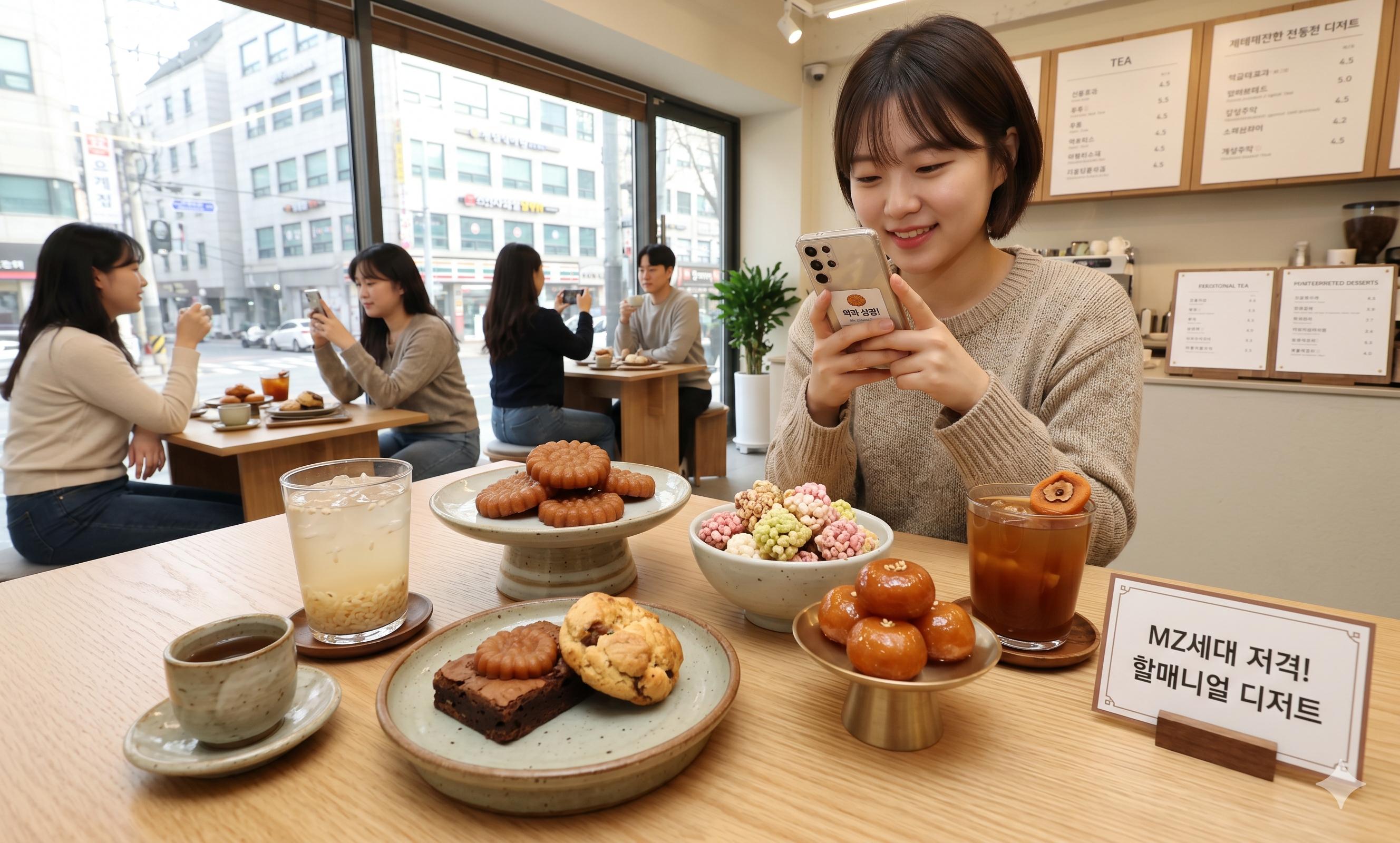
Korean traditional desserts are moving beyond their conventional role in holidays and ancestral rites, making inroads into cafes, convenience stores, and everyday retail. The shift is being read alongside the rise of the so-called "halmaenial" consumer trend — a portmanteau of "grandmother" and "millennial" — in which younger generations are showing renewed interest in the flavors associated with older relatives. Foods once seen as belonging exclusively to middle-aged or elderly consumers are being repositioned for a younger audience.
The "Yakgetting" Phenomenon
Yakgwa is a traditional confection made from wheat flour, honey, and oil — its name, written as 藥果 in Chinese characters, literally means "medicinal fruit," with historical records including the Gyuhapchongseo noting it was called a "medicinal confection" for containing wheat, honey, and oil. During the Goryeo period, the ingredients were so scarce that the dessert was largely confined to the royal court and aristocracy, and restrictions on its production were reportedly imposed due to its impact on prices. In recent years, demand has concentrated around select producers, giving rise to the term "yakgetting" (약켓팅) — a blend of yakgwa and "ticketing" — to describe the difficulty of purchasing it. Today's yakgwa is also evolving beyond its original form, now appearing in fusion formats such as yakgwa scones, financiers, and cookies. Gaeseongjuak, a heritage dish from the Gaeseong region, has similarly gained attention. Made by frying glutinous rice dough mixed with makgeolli and coating it in grain syrup, it has drawn notice for its chewy texture and distinctive appearance, with social media posts featuring the item on the rise.
Gangjeong: A Study in Texture
Gangjeong is a traditional confection made by drying glutinous rice dough, deep-frying it until it puffs into a hollow structure, then coating the surface with honey or grain syrup and finishing with sesame seeds, pine nuts, or bean flour. The Joseon-era household encyclopedia Gyuhapchongseo described the texture as so light it seemed to "fly away when bitten" — a reflection of how critical proper expansion during frying is to the final product. Historically, the labor-intensive process and scarce ingredients limited gangjeong to festive and ceremonial occasions, though it is now commercially available in a wider range of forms.
Sikhye and Sujeonggwa: Traditional Drinks With Scientific Foundations
Both sikhye and sujeonggwa are grounded in relatively well-documented principles. Sikhye is produced through the action of amylase enzymes in malted barley, which break down the starch in cooked rice into maltose, generating its natural sweetness. Maintaining a temperature of 60–70°C during the process is considered a key variable. Sujeonggwa is made by simmering ginger, cinnamon, and black pepper, then adding dried persimmon and pine nuts. The primary ingredients are generally regarded as warming in nature, which is cited as the reason the drink is considered easy on the stomach even when served cold.
Expanding Market, Open Questions
The cafe sector has seen a growing number of products incorporating traditional ingredients such as mugwort, black sesame, and injeolmi into lattes, gelatos, and shaved ice. Convenience store releases featuring traditional motifs have also been observed. This pattern can be understood as a form of "reinterpreted consumption," in which traditional ingredients are reworked into contemporary formats. However, the current picture is largely one of SNS-driven visibility and demand concentrated around select products. Whether traditional desserts will establish a durable foothold in the everyday snack market will require further data.