
7 Foods You Must Eat at a Korean Traditional Market
In This Article
Korean Markets Sell Food That Restaurants Cannot Replicate
Korean traditional markets, called SIJANG (시장), have been serving street food for over a century. The recipes are old, the stalls are small, and most vendors have been doing the same thing for decades. Some of these foods exist outside of markets, but they do not taste the same. This is the list of foods you need to eat at a SIJANG at least once.
1. BINDAETTEOK: The Mung Bean Pancake You Will Not Forget
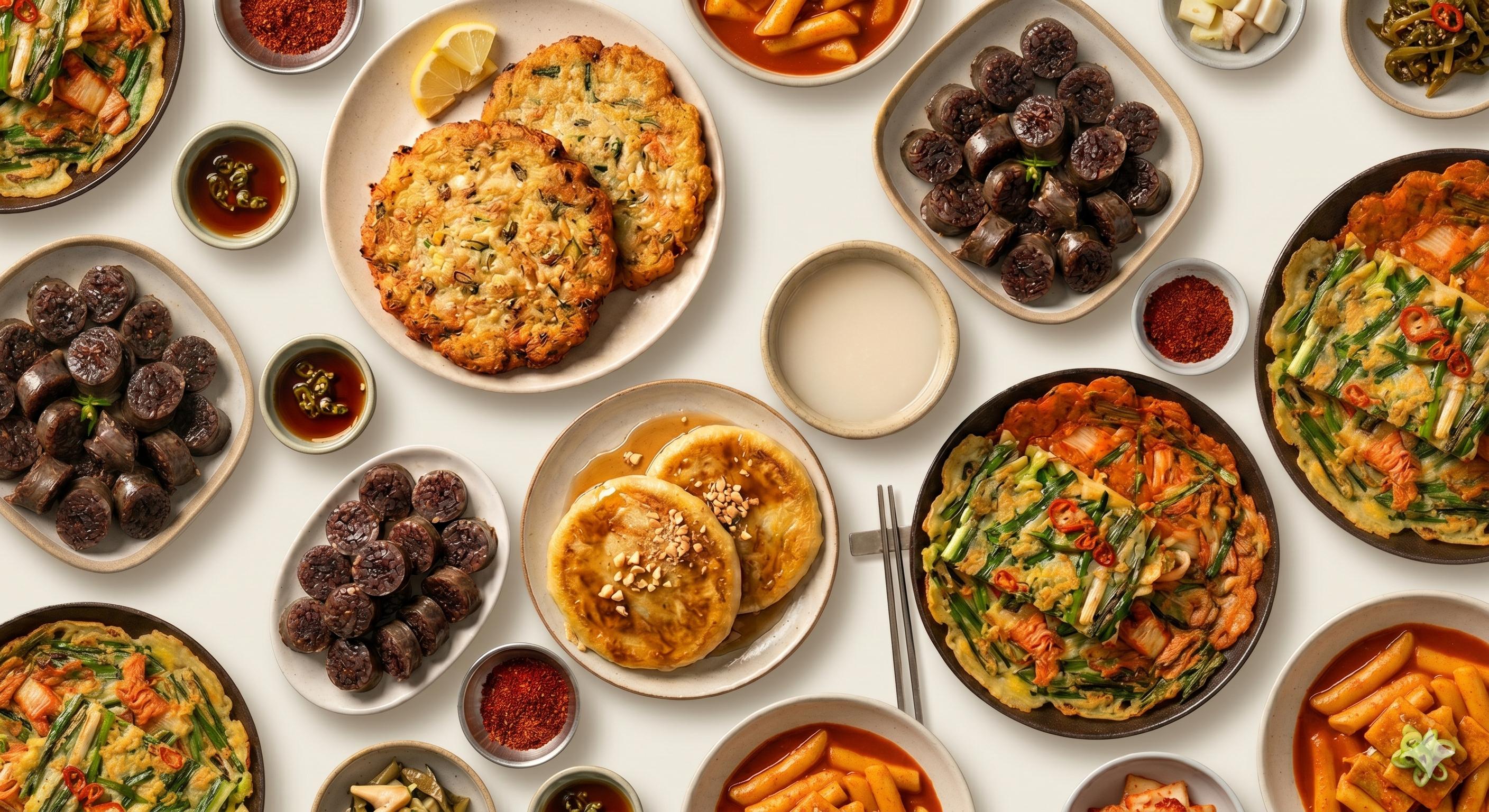
BINDAETTEOK (빈대떡) is a thick pancake made from ground mung beans, mixed with kimchi, pork, and green onion, then fried on a flat iron griddle until the outside is deep brown and crispy. The inside stays dense and chewy. It is savory, slightly smoky from the griddle, and heavy enough to be a full meal on its own.
This is one of the oldest street foods in Korea. During difficult periods in Korean history, mung beans were cheap and filling, so BINDAETTEOK became food for the people. Today the most famous stalls are at Gwangjang Market in Seoul. A single piece costs around 4,000 to 5,000 won. Eat it hot with a soy sauce dipping sauce and a glass of MAKGEOLLI (막걸리). That combination is one of the most iconic food pairings in all of Korean street food culture.
2. HOTTEOK: Molten Sugar Inside a Crispy Pancake
HOTTEOK (호떡) is a round, flat pancake filled with brown sugar, cinnamon, and sometimes crushed nuts or seeds. The dough is pressed flat on a griddle with a circular mold while frying. The outside turns golden and slightly crispy. The inside becomes molten sugar that flows when you bite in. It will burn your mouth if you are not careful. That is part of the experience.
HOTTEOK costs around 1,000 to 2,000 won at most market stalls. It is a winter food by tradition, but stalls sell it year-round because tourists ask for it regardless of season. The version sold at Namdaemun Market in Seoul is considered a standard reference point. In Busan, a variation called SSIAT HOTTEOK (씨앗호떡) is filled with a mix of seeds and honey instead of plain sugar. It is denser and less sweet, and many people prefer it to the original.
3. YUKHOE: Raw Beef That Tastes Nothing Like You Expect
YUKHOE (육회) is raw beef, sliced thin and seasoned with sesame oil, garlic, soy sauce, and Korean pear. A raw egg yolk is placed on top. You mix everything together and eat it. The pear softens the texture of the beef and adds a faint sweetness. The sesame oil does most of the flavor work. The result is light and clean, not heavy or gamey.
Most first-time visitors hesitate. That is understandable. But YUKHOE has been eaten in Korea for centuries, and the market vendors who sell it have been handling beef this way their entire lives. Gwangjang Market is the best-known place to try it in Seoul. A serving costs around 10,000 to 15,000 won. Order it with MAKGEOLLI and BINDAETTEOK for a full traditional market meal.
4. SUNDAE: The Korean Street Sausage That Looks Unusual
SUNDAE (순대) is a Korean sausage made by stuffing pig intestine with glass noodles, pork blood, vegetables, and rice. The entire thing is steamed, then sliced into rounds and served with salt and chili powder for dipping. It looks unfamiliar. The flavor is mild and slightly earthy. The texture is soft with a slight chew from the noodles inside.
SUNDAE is one of the most common market foods in Korea. It is sold at street stalls, pojangmacha tents, and inside every major SIJANG. It is almost always served alongside TTEOKBOKKI (떡볶이) and TWIGIM (튀김, Korean fried snacks) as a set called BOONSHIK (분식). Ordering all three together for under 10,000 won is one of the best budget meals in the country.
5. KALGUKSU: Knife-Cut Noodles Made in Front of You
KALGUKSU (칼국수) means knife-cut noodles. The dough is rolled flat by hand and cut into wide, uneven strips on the spot. The noodles go straight into a broth made from anchovies, clams, or chicken. The result is a bowl of noodles with rough edges and a texture that no machine-made noodle can match. The broth is clear and deeply savory.
At Gwangjang Market, the KALGUKSU stall that appeared in the Netflix documentary Street Food still operates today. The line is long at lunch. Go before noon or after 2 PM to avoid the worst of it. A bowl costs around 8,000 won. This is a food that warms you from the inside, and watching the vendor cut the noodles to order makes it taste better.
6. JEON: The Savory Pancake Category That Has No Bad Version
JEON (전) is the Korean word for savory pancake, and there are dozens of types. HAEMUL PAJEON (해물파전) is made with green onion and mixed seafood. KIMCHI JEON (김치전) is made with fermented kimchi, which gives the batter a sour and spicy flavor. HOBAK JEON (호박전) uses zucchini slices dipped in egg batter and pan-fried until tender. Each type is different enough that ordering two or three varieties is standard.
JEON is everywhere in Korean markets. The sound of batter hitting a hot oiled pan and the smell that follows is the signal that a good market stall is nearby. Prices range from 3,000 to 8,000 won depending on the type and size. JEON is best eaten immediately while the edges are still crispy. It pairs well with MAKGEOLLI, which is why the two are traditionally sold together at market stalls.
7. GANJANG GEJANG: Raw Crab Marinated in Soy Sauce
GANJANG GEJANG (간장게장) is raw crab soaked in soy sauce, garlic, ginger, and chili for several days. The shell stays on. You eat it by picking the meat directly from the shell with chopsticks, or by pressing the shell against rice to absorb the sauce. Koreans call it BAPDO DAEJEOK (밥도둑), which means rice thief, because you will keep eating rice just to have more of the sauce.
GANJANG GEJANG is available at seafood markets and specialty restaurants, but the freshest and most affordable versions are found at coastal market stalls, particularly at Jagalchi Market in Busan and Noryangjin Market in Seoul. It is an acquired taste for some. The raw texture is soft and briny. But for many visitors, this becomes the single most memorable thing they ate in Korea.
One Rule for All of These Foods
Bring cash. Most market stalls do not accept cards. Small bills in Korean won are the only thing you need. A full meal of three or four items at any Korean SIJANG will cost under 15,000 won. No reservation, no menu in English, no dress code. Just point at what looks good and eat it standing up if you have to. That is the correct way to eat at a Korean market.