
Why K-Drama Fans Travel the World to Recreate a Scene
In This Article
- K-drama fans are visiting filming locations not to sightsee, but to physically recreate scenes — a behavior rooted in emotional attachment, not tourism.
- Fan-produced "recreation content" circulates on TikTok and Instagram, guiding the next wave of visitors and sustaining the cycle long after a show ends.
- Researchers call it a parasocial relationship. Fans call it something they just had to do.
Six months after finishing Queen of Tears, Singaporean blogger Nadia Lau flew to Germany. Not for Berlin's museums or Brandenburg Gate — but to retrace the exact honeymoon route of the show's lead couple, visiting the Berlin Cathedral, Potsdam's Old Market Square, and the steps of Sanssouci Palace.
She is not unusual. She is the pattern.
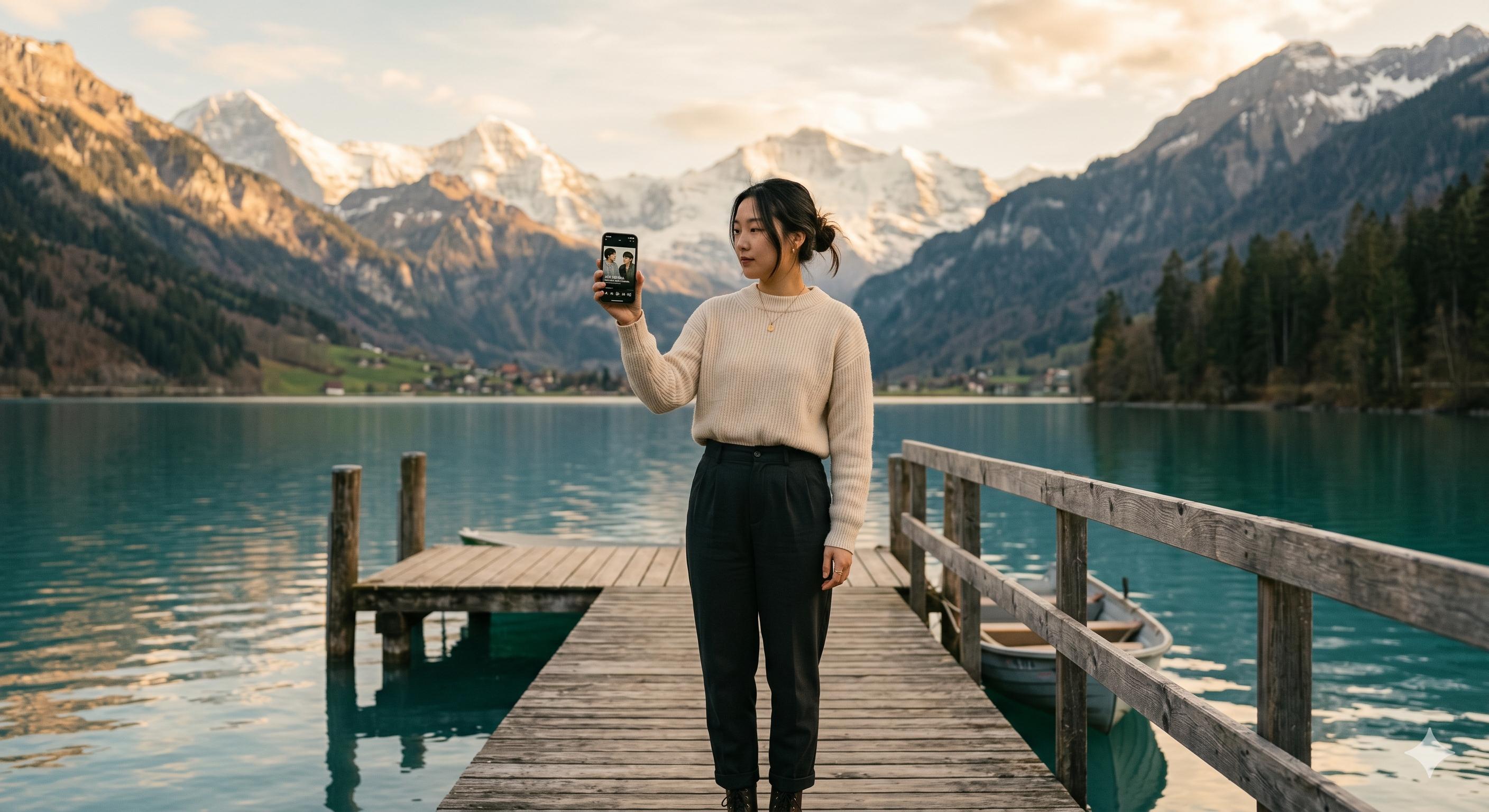
Across the world, K-drama fans are making trips specifically to stand where a scene was filmed — and then recreating it. Same angle. Same pose. Sometimes the same props. At Jumunjin Beach in Gangneung, where Goblin's iconic summoning scene was shot, a signboard marks the exact filming spot so fans can position themselves correctly. Nearby vendors have reportedly offered red scarves and buckwheat bouquets — the drama's signature props — for rent.
This is not sightseeing. This is something else entirely.
The Psychology Behind the Trip
Media researchers have a name for what K-drama viewers experience: a parasocial relationship. Viewers don't interact with characters directly, but they form genuine emotional bonds — a one-sided connection that feels, psychologically, like a real one.
K-dramas are unusually good at building this. Long episode runs, emotionally loaded scenes, and real-world filming locations — not studio sets — all intensify the connection. The café where two characters kept missing each other. The bench where someone finally said what they meant. These are places you can actually go.
K-drama fans who create K-wave content or engage actively with fandom show statistically significantly stronger parasocial bonds than passive viewers. — Peer-reviewed research, PMC (2024)
Visiting a filming location and recreating a scene is that same impulse made physical — the parasocial relationship stepping off the screen and into the world.
How TikTok Turned a Personal Experience Into a Collective Script
What changed in the last few years is not the feeling. It's the infrastructure.
When a fan recreates a scene and posts it, the video doesn't just document a trip — it functions as a how-to guide for the next visitor. Exact angle. GPS pin. Which breakwater at Jumunjin. What time of day the light is right.
The fan content loop
Watch the drama and form an emotional connection
Travel to the filming location
Recreate the scene — same angle, same props
Post the content, inspire the next fan
Unlike conventional tourism, which fades after a promotional campaign ends, filming locations tied to emotionally resonant scenes continue drawing visitors for years. The content never fully goes away. Neither does the desire to be in it.
The Scale Is Bigger Than the Data Suggests
But here's what the tourism statistics miss: when the filming location is outside Korea — in Switzerland, Germany, or Canada — that travel doesn't appear in Korea's inbound data at all. The actual reach of K-drama-driven movement is almost certainly larger than what gets counted.
What This Reveals About How People Consume Stories Now
The fan who flies to Potsdam to stand on the same palace steps as a fictional couple isn't confused about what's real. She knows it's a drama. What she's after is something harder to name — the feeling of closing the distance between watching and being there.
K-drama does this better than most content formats because of how it's made: real places, real streets, real light. The gap between screen and location is small enough to cross. And increasingly, fans are crossing it.
The filming location has become the final scene. One the viewer gets to step into themselves.