
Make Your Own Hanji: Where to Try in Korea
In This Article
You Can Actually Make the Paper Yourself
Hanji, Korea's traditional handmade paper, is one of those crafts that sounds complicated until you try it. The basic process of forming a sheet of Hanji by hand is something a first-time visitor can experience in about one to two hours. Several locations across Korea offer Hanji-making experience programs designed specifically for visitors with no background in papermaking. The experience gives you something physical to take home and a direct connection to a craft that Korea has practiced for over a thousand years.
Jeonju: The Best Place for a Hanji Experience
Jeonju is the undisputed center of Korea's living Hanji tradition. The city has been producing Hanji for over a thousand years and still has active mills and craft studios where traditional methods are maintained. For visitors, Jeonju offers the most complete Hanji experience available anywhere in Korea. You can visit a working Hanji mill to see the full production process, from soaking the bark to drying the finished sheets, and then participate in a hands-on session where you form your own sheets using the traditional HEULLIMTTEUKGI technique.
The Jeonju Hanji Museum is a dedicated institution focused entirely on the history and craft of Hanji. It has a permanent exhibition covering the materials, tools, and techniques of Hanji production, and it runs regular experience programs for individual visitors and groups. The museum is located in the Hanji Culture District near the center of Jeonju and is easily accessible from the famous Hanok Village. Combining a Hanji experience with a visit to the Hanok Village makes for a full day of traditional Korean culture.
What the Jeonju Hanji Festival Offers
Jeonju holds an annual Hanji Festival, typically in May, that dramatically expands the range of Hanji experiences available to visitors. During the festival, temporary workshops are set up throughout the Hanji Culture District where you can try different techniques, see demonstrations by master craftspeople, and purchase Hanji products directly from producers. The festival also features contemporary art and design installations that use Hanji as a medium, showing the material in a modern context. For visitors who want a concentrated introduction to Hanji culture, the festival period is the best time to visit Jeonju.
Seoul Options for Hanji Experience
If traveling to Jeonju is not possible, there are Hanji experience options within Seoul. The National Folk Museum of Korea inside Gyeongbokgung Palace occasionally runs Hanji craft programs as part of its traditional craft series. Insadong has several small cultural craft studios that offer Hanji experience sessions, typically lasting one to two hours and covering basic sheet-forming or Hanji craft techniques such as making small decorative items, bookmarks, or simple folded objects.
The Seoul Craft Museum in Jongno-gu is another venue that includes traditional Korean craft experiences in its programming. The museum focuses on living craft traditions and regularly updates its workshop schedule. Checking the museum's program calendar before your visit is recommended, as Hanji sessions are scheduled on specific dates rather than being available every day.
What Happens During a Hanji Experience
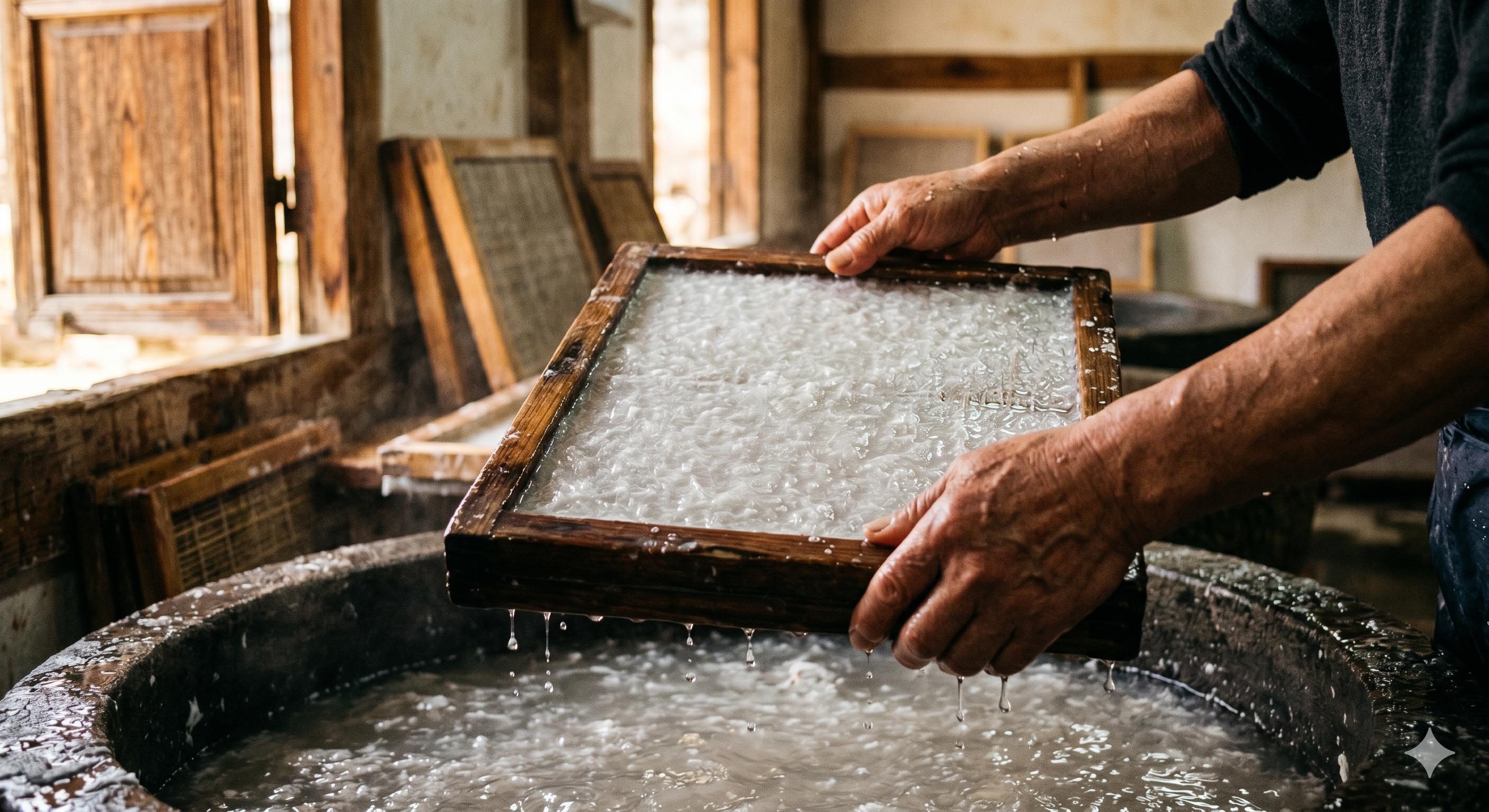
A typical Hanji-making session begins with a brief introduction to the materials and the history of the craft. You are then guided through the process of preparing the fiber suspension and forming sheets using a wooden frame and screen. The multi-directional movement required to form a proper Hanji sheet takes a few tries to get right, and instructors guide you through each attempt. Once you have formed a sheet, it is pressed and dried while you continue with other parts of the session. At the end, you take home the sheets you have made. Many programs also offer the option to add natural dyes or pressed flower decorations to your sheets during the drying process.
Beyond Sheet-Making: Hanji Craft Workshops
Some programs go beyond basic sheet-forming and teach HANJI CRAFT, known as HANJI GONGYE in Korean. In these workshops, you use pre-made Hanji to create three-dimensional objects. Traditional Hanji craft involves layering and shaping the paper over molds to create boxes, trays, bowls, and decorative containers. The finished objects are surprisingly strong. A well-made Hanji box can hold weight and resist moisture better than most people expect from a paper-based object. These workshops typically run for two to three hours and produce a finished object you can take home on the day.
Tips for Visiting
Wear clothes you do not mind getting wet or stained. The sheet-forming process involves water and the fiber suspension can leave residue on clothing. Most studios provide aprons but water contact is unavoidable. Arrive a few minutes early if possible, as the introductory segment covers information that makes the hands-on portion more meaningful. If you are visiting Jeonju specifically for the Hanji experience, booking in advance is recommended during peak travel periods and during the festival in May. English language support is available at the Jeonju Hanji Museum and at most tourist-oriented studios in Insadong.