
GANJANG (간장): Why Korean Soy Sauce Is So Different
In This Article
It Was Never Designed to Stand Alone
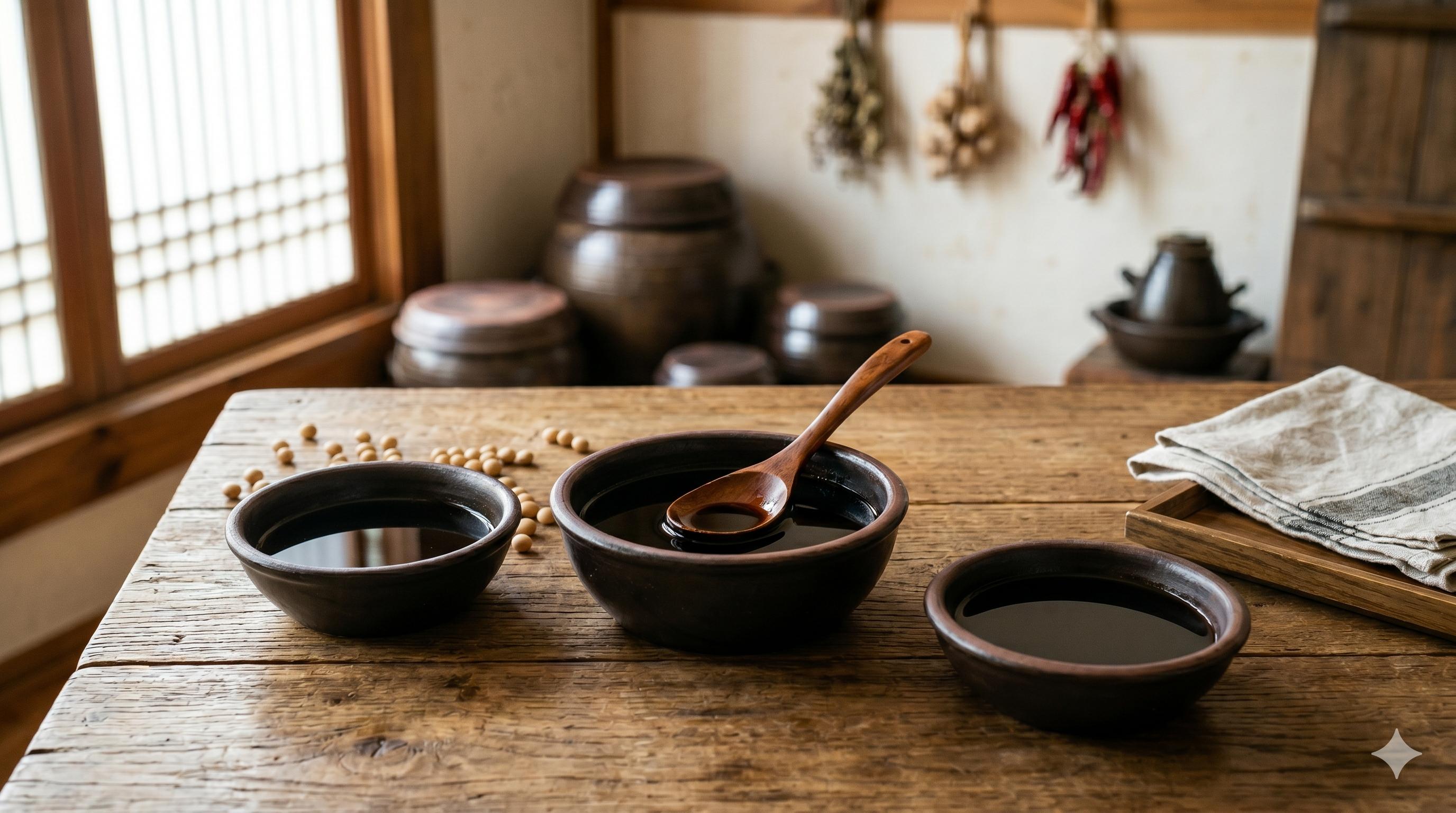
GANJANG (간장) did not originate as an independent product. GANJANG and DOENJANG are produced together from the same process. When fermented MEJU blocks are submerged in brine and left to age, the liquid that accumulates is GANJANG. The solid blocks that remain are pressed and salted to become DOENJANG. For much of Korean culinary history, the two were inseparable — made together, from the same pot, through the same process. They share an origin, and they developed in parallel over centuries into two products with distinct characters and uses.
Most people outside Korea encounter GANJANG simply as Korean soy sauce. That framing is not wrong, but it leaves out most of what makes GANJANG worth understanding. The differences in production method, microbial profile, and flavor between Korean GANJANG and other regional soy sauces are real and meaningful — not a matter of national preference, but of how fundamentally different fermentation approaches produce different results.
How GANJANG Is Made
The process begins with MEJU (메주): blocks of cooked soybeans that have been shaped and left to ferment naturally, typically wrapped in rice straw. The straw provides a habitat for Bacillus subtilis and various wild molds, which colonize the block and begin enzymatic breakdown of the soy proteins. After several months of drying and fermentation, the MEJU blocks are washed, broken into pieces, and placed into large ONGGI (옹기) earthenware pots.
Brine at a concentration of roughly 18 to 20 percent is added, along with charcoal and dried red peppers. The charcoal helps adsorb unwanted odor compounds, while the peppers contribute antimicrobial properties that assist in shaping the fermentation environment. The pot is covered with a cloth to allow airflow while limiting contamination, then left outdoors — typically for 40 to 60 days. During this period, proteolytic and amylolytic enzymes from the MEJU break down proteins and starches into amino acids, peptides, and simple sugars, which collectively build the flavor depth that GANJANG is known for.
When fermentation is complete, the liquid is strained off and simmered to concentrate flavor and reduce water activity for preservation. That reduced liquid is GANJANG. The MEJU solids that remain are pressed, combined with additional salt, and aged separately to become DOENJANG.
Two Types, Two Entirely Different Things
There are two fundamentally different categories of GANJANG in Korea, and using one in place of the other produces a noticeably different result in cooking.
The first is JOSEON GANJANG (조선간장), also called GUKGANJANG (국간장). This is the traditionally fermented style produced through the MEJU process described above. It is relatively dark in color, high in salinity, and intense in flavor — with a sharp, complex savoriness that comes from the diverse microbial activity during natural fermentation. It is used primarily in soups, stews, and seasoned vegetable dishes, where its depth integrates into a broader flavor base rather than standing out on its own.
The second type is YANGJO GANJANG (양조간장), a brewed soy sauce developed using methods introduced to Korea in the early twentieth century. It incorporates both soybeans and wheat, uses controlled starter cultures, and undergoes a more standardized fermentation process. The result is smoother, rounder, and less pungent than JOSEON GANJANG — closer in character to Japanese-style shoyu. YANGJO GANJANG is what the majority of Korean households use today for dipping sauces, marinades, and general seasoning. Most international visitors encountering Korean food are tasting YANGJO GANJANG without realizing it.
Why It Tastes Different From Japanese and Chinese Soy Sauce
Soy-based fermented condiments appear across East and Southeast Asia, but the fermentation methods produce meaningfully different products. Japanese shoyu is made by fermenting a mixture of soybeans and roasted wheat with Aspergillus oryzae. The wheat contributes fermentable sugars that yield alcohols and aromatic esters, resulting in a characteristic sweetness and relatively lighter color. Chinese soy sauce varies considerably by region, but generally includes both light and dark styles, with the dark version often incorporating caramel or molasses to deepen color and add sweetness.
Traditional Korean JOSEON GANJANG is made from soybeans alone, fermented through naturally occurring microbial communities rather than single-strain starter cultures. The absence of added grain and the complexity of wild fermentation produce a more austere flavor profile: less sweet, more saline, with a stronger and less predictable aromatic character. The difference is apparent immediately when tasted side by side. These are not interchangeable in recipes that rely on the specific flavor contribution of each — experienced Korean cooks treat them as distinct ingredients.
GANJANG Among Regional Soy Traditions
Fermented soy condiments have developed across much of Asia, each shaped by local ingredients, climate, and culinary tradition. Japan has shoyu and tamari. China has a range of regional jiang you. Vietnam uses tuong, and Indonesia produces kecap in various forms. Each tradition reflects distinct choices about which grains to use, which microorganisms to cultivate, and how long to ferment.
What distinguishes Korean GANJANG within this broader landscape is its structural relationship with DOENJANG. In most other soy sauce traditions, the liquid product is the primary output and the solids are treated as secondary or discarded entirely. In the Korean tradition, both the liquid and the solid are carried forward as finished products of comparable importance, each aged separately and used for different culinary purposes. This co-production model — where nothing is discarded and both outputs are valued — gives Korean traditional fermentation a practical logic that is relatively unusual among soy-based condiment systems, though not without some parallels in other fermentation cultures.
How Koreans Actually Use It
GANJANG functions differently depending on which type is used and what the dish requires. JOSEON GANJANG seasons soups and stews — miyeok-guk (미역국), doenjang jjigae, and other broth-based dishes — where its salinity and intensity work within a broader flavor base without adding sweetness. It is also used in small quantities to season NAMUL (나물) vegetable dishes, contributing depth without heavy salting.
YANGJO GANJANG handles the majority of other applications: dipping sauces for dumplings and pajeon, the base for bulgogi marinade, seasoning for bibimbap, and everyday table use. The two types are generally not interchangeable in traditional recipes, even if both are technically GANJANG.
One of the more distinctive preparations is ganjang gejang (간장게장): raw crab marinated in GANJANG for several days until the meat develops a silky, briny richness and the roe thickens. Koreans refer to it as bap doduk — rice thief — because the flavor is concentrated enough to carry bowl after bowl of plain rice without any other accompaniment.
The Aging Factor
Like DOENJANG, GANJANG develops considerably with age. Freshly made GANJANG is functional but relatively straightforward in flavor. After a year of aging, the profile deepens and becomes more integrated. Over several years, continued Maillard reactions and ongoing microbial and enzymatic activity produce a more layered result — richer in color, more concentrated in umami, and softer in its sharper edges.
Families that maintain a JANGDOKDAE (장독대), the traditional outdoor platform for ONGGI storage pots, sometimes keep GANJANG that has been aging for a decade or more. This older GANJANG is used sparingly, in dishes where its concentrated character can be appreciated rather than lost. Some Korean households maintain stores that span multiple generations — not because they planned to age it that long, but because it kept improving and there was always a reason to preserve it a little longer.
A Condiment With Deep Roots
References to fermented soybean condiments in Korea appear in historical records dating back at least to the early centuries of the Common Era, with mentions in documents from the Three Kingdoms period and later dynastic records describing the importance of JANG in both household and court cooking. For most of that history, GANJANG was not purchased. It was produced at home, maintained across seasons, and transferred between generations along with the knowledge required to make it well.
That knowledge — how to read the state of the fermentation, when to separate the liquid from the solid, how to adjust salt levels based on the season and the quality of the soybeans — was accumulated through direct experience and passed down through practice. Today, the majority of Korean households buy GANJANG from a supermarket. But the traditional practice has not disappeared entirely. It continues in home kitchens and among producers who maintain the MEJU-based method, and the broader practice of JANG DAMGGI — the seasonal making of fermented condiments — has been recognized as part of Korea's living intangible cultural heritage. GANJANG began as the liquid left over from making something else. Over centuries, it became a defining element of Korean cuisine.